
Editors: Lakshmi Markonda, RN, MSN | PhD student & Janet Williams, PhD
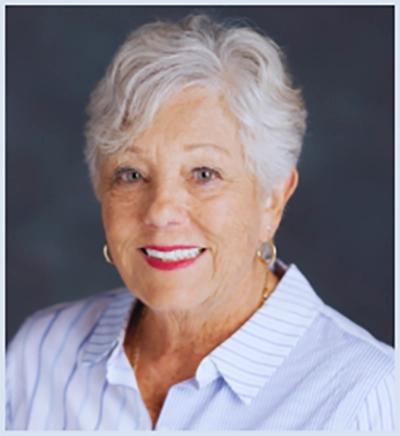
ISRHML President's Welcome
Dear ISRHML Members and Colleagues,
It is with great excitement and enthusiasm that I begin my 2-year tenure as President of ISRHML. After serving as President-elect under Dr. Carol Wagner, I have been mentored by a wonderful colleague who has given so much of her time and effort, while working as a busy neonatologist, to our society. We begin the future work as a cohesive and committed team on your Executive Committee. Our biennial meeting to be held in Munich, Germany, in October 2026 is proving to be very successful, and our membership is growing. Our allegiance to the human milk and lactation field and to trainees continues to be a priority as we go forward. In addition, we embrace the global reach of the society and the belief that all infants deserve human milk and all mothers should have the knowledge and opportunity to breastfeed. We are also a society that is diverse in our professions and disciplines which makes us strong and widely relevant. Our members contribute extraordinarily important research about human milk and lactation through basic, clinical and applied science and our influence is worldwide. It is such a privilege for me to be connected to ISRHML in many ways, but in particular as your President. I look forward to many opportunities to interact with members and to encourage the growth and reach of ISRHML.
From the Editors
Dear ISRHML Members, Trainees, Early-Career Researchers, and Colleagues,
Since our November 2024 edition, Milk Minutes has been on a hiatus, and it returns different. This newsletter is being produced as a partnership between the ISRHML Executive Committee and the Trainee Interest Group Governing Committee. ISRHML has always been a society built on mentorship and collaboration, but that doesn’t happen by accident. It requires intentional spaces where human milk and lactation researchers at all
career levels are genuinely central to how we communicate, think, and build community. Milk Minutes is one of those spaces, and this edition marks the beginning of a chapter we are both genuinely excited about.
We bring to this role perspectives shaped by experience across research, clinical practice, and training, formed in laboratories, hospital wards, at the bedside of lactating mothers, and in the corridors of academia. Different vantage points, different career stages, but one shared conviction: that human milk and lactation science is most powerful when it is connected to the communities it serves.
“I know what it’s like to wonder if you truly belong. I know the exhaustion of codeswitching, the smallness that comes from being unseen. But I also know what changes when you find your people: researchers who ask questions grounded in lived experience, mentors who actively make space for voices like yours, a community that says, “Your perspective matters. Your science matters. You matter.””
— Lakshmi Markonda, Co-Editor
Milk Minutes is that community, where your work gets celebrated, your questions are genuine inquiries, and mentorship is mutual, bidirectional, real. In this edition, we bring to you the ISRHML President’s Message, an Event Recap, an Expert Q&A, an Evidence-Based Corner, a Trainee Spotlight, announcements of the ISRHML Americas Regional Webinar on July 23rd featuring Dr. Kaytlin Krutsch and Dr. Margaret H. Rabotnick and of the 23rd ISRHML Conference, to be held in Munich, October 8–11, 2026.
For future editions, we warmly invite you to participate. Share your research, reflect on your journey, write about what it means to build a career in this field. Together, let us make Milk Minutes the living voice of a community that cares deeply about human milk, lactation science, and the mothers and infants at the heart of our work.
Thank you for being part of ISRHML. There is much to build together.
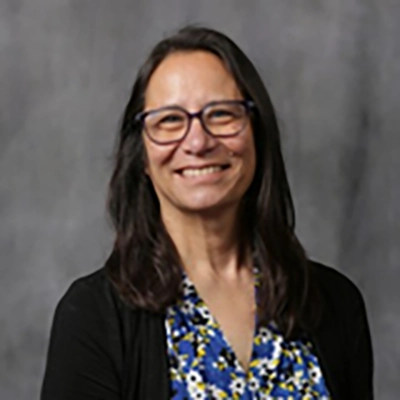
Co-Editor, Milk Minutes | ISRHML Executive Committee Secretary
Warm Regards
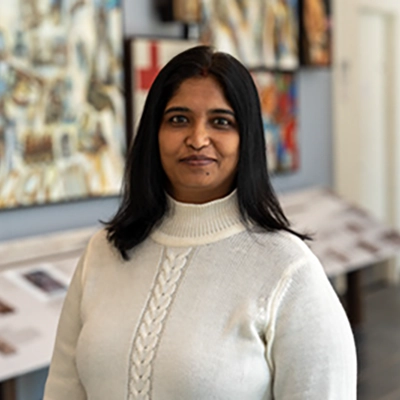
Co-Editor, Milk Minutes | ISRHML TIG Governing Committee
Expert Q & A
Professor Donna Geddes
Senior Principal Research Fellow, School of Molecular Sciences
Director UWA Centre for Human Lactation Research and
Translation
Director ABREAST Network
Director Geddes Hartmann Human Lactation Research Group
Sensor Lead ARC Training Centre for Next-Gen Technologies in
Biomedical Analysis
Career & Research Journey
LM: You began your career in medical imaging before moving into lactation science. How did that transition happen, and what would you say to trainees who feel their background may not be a perfect fit for this field?
Dr Geddes: Indeed, my path into this f ield was not a straight line. I trained in medical imaging, and being ever so curious, was looking for ways to improve my practice. That opportunity was given to me by the late Professor Peter Hartmann to study for a postgraduate diploma at UWA. What I brought with me to the f ield was not a background in lactation but a way of seeing, and it turned out that imaging could answer many questions in this f ield that otherwise remained elusive. This experience is why I would encourage anyone with a deep interest in lactation to seek out ways to apply their existing skills to it. Some of the most impactful research we do comes from multidisciplinary teams consisting of people f rom different backgrounds, bringing a richness of perspective that a single discipline simply cannot. A background that doesn’t
look like a “perfect fit” is often the one that brings something genuinely new.
LM: Your group pioneered the use of ultrasound imaging in lactation research. What do you consider the most signif icant insight that technology has given us about breastfeeding, something we simply could not have known otherwise?
Dr Geddes: The most signif icant insight is that milk is removed f rom the breast by vacuum, not by the infant’s tongue, stripping the breast in a peristaltic action, as was long assumed. That one f inding reshaped how we understand breastfeeding itself, and itis something only imaging could have shown us, because it is invisible f rom the outside. It explains why low tone and preterm babies remove less milk than term infants, and even why some mothers experience nipple pain when the latch looks perfectly satisfactory, in that some babies generate exceptionally strong vacuums (enough to cause bruising). Ultrasound also elucidated the anatomy of the lactating breast. We showed that large volumes of milk are not stored at the nipple, as the milk ducts did not display lactiferous sinuses. This explains why mothers with larger ducts can typically hand express more than those with smaller ones, and why so little is available in the absence of milk ejection. We found fewer ducts than the textbooks claimed, around nine rather than f ifteen to twenty, which also explains why breast reduction surgery so often leads to low milk supply. And we learned that ducts are compressible, with direct consequences for breast shield design and fitting in pump-dependent women, and for understanding blocked ducts. Taken together, this body of work gave us a fundamentally new picture of the breast and of breastfeeding.
LM: Looking back at your own training years, what is one piece of advice you wish someone had given you early in your research career?
Dr Geddes: I wish someone had told me to enjoy my training years more. There is a real f reedom in that period that’s easy to miss while you are neck deep in your PhD and are training. This is the time to exploit your curiosity, dig deeply into questions, and learn without the academic pressures that come later with funding, supervision and leadership. My advice now is to make the most of that time: be intellectually adventurous, ask the questions you are drawn to, and start to think critically in ways that a different to long held dogma.
Science & Research Priorities
LM: Human milk is increasingly recognised as a highly complex biological fluid. In your view, what are the most under-researched components or functions of human milk that the f ield urgently needs to address?
Dr Geddes: Until recently the f ield has looked at milk composition almost entirely through the lens of benef it to the infant. What we are only beginning to appreciate is that milk is also a reflection of the physiology/biology of the mammary gland itself. It is a signal shaped by maternal health and environment. If those factors affect the milk, we would expect them to affect the structure and function of the mammary epithelial cells
producing it, and that connection is largely unexplored.
So, the components I think are most urgently under researched are the ones that carry that signal: the cellular and regulatory side of milk rather than just its nutrients.
LM: Your work spans breast anatomy, milk ejection, preterm infant feeding, and appetite regulation, a remarkably broad scope. How do you approach maintaining depth across multiple research themes simultaneously, and how do you recommend trainees think about specialisation versus breadth?
Dr Geddes: The common thread across all these areas is ultrasound imaging. I have always believed studies are more powerful when they combine modalities, and imaging has let us do that repeatedly. We combined imaging of the stomach with the composition of the milk ingested to see how it affected gastric emptying; we combined breast anatomy with measures of milk production. Each theme looks separate, but methodologically they are multiple approaches applied to different questions.
That kind of approach also often depends on collaboration, because if the expertise is not present in your group you must seek it out. This is a worthwhile skill to develop. So, my advice to trainees is to build genuine depth in a core method or question first. However, do not mistake a narrow topic for depth. Once you have an anchor, breadth comes f rom carrying that strength into new problems with the engagement of additional modalities to create more impactful studies.
LM: Q6 The translation of lactation research into clinical practice can be slow. What strategies have worked for your group in ensuring that f indings reach and are adopted by clinicians and breastfeeding support professionals?
Dr Geddes: The key has been staying embedded in the clinical community rather than treating dissemination as a f inal step. We have built lasting relationships with hospital educators, NICUs, breastfeeding centres, and community groups in our area, and we are in continuous conversation with them about what we are f inding. That closeness works in both directions: clinicians help shape the questions we ask, so the answers are ones they actually need. The other lesson I have learnt, and a slightly counter intuitive one, is that you cannot share the same f inding too often. Clinicians are extremely time poor, so a single presentation rarely sticks. We have learned to take every opportunity, in every forum, to repeat the message and I believe that repetition is what eventually turns a finding into practice.
Global & Equity Prespectives
LM: As a leading researcher based in Australia, how do you see the Asia-Pacific region contributing to the global human milk and lactation research landscape, and where do you see the greatest opportunities for international collaboration?
Dr Geddes: The Asia Pacific is one of the most valuable regions for this field precisely because of its diversity including ethnic, dietary, and across very different income settings, often side by side. Most recently we have been collaborating with colleagues in Singapore, who have two excellent cohort studies spanning three ethnicities. This kind of design is hard to achieve. And there is a clear appetite growing across the region: countries increasingly interested in infant feeding research are sending PhD students to Australia to train, building the next generation of researchers who will lead this work at home. The greatest opportunity, I think, is to connect these efforts. This would be in the form of shared cohorts, shared methods and reference standards to help make findings comparable across populations.
LM: Equity in breastfeeding outcomes remains a signif icant global challenge. How should researchers, including those early in their careers, think about incorporating equity and diversity considerations into their study designs and research questions?
Dr Geddes: The biggest issue is the diversity of participants in our studies and conventional methods of recruitment usually does not improve it. Our approach is to actively target underrepresented groups, such as lower socioeconomic communities. We might visit a hospital clinic and, with permission, talk to women in the waiting rooms, or go out to a mothers’ and babies’ group in an area we want to reach. These efforts also create a snowball effect, with participants going on to recruit others for us. But equity I think has to start earlier than recruitment. It also shapes the questions we ask and the way we measure them. For example, whether our outcomes reflect what matters to families across very different circumstances. For researchers early in their careers, my advice is to build this thinking in f rom the design stage rather than treating diversity as a box to tick. It takes more time and more presence in the community, but it is essential to ensure the f indings will hold for the women who may need them most.
Looking Ahead
LM: What excites you most about where human milk and lactation science are heading over the next decade, and what role do you hope the next generation of researchers will play in shaping that future?
Dr Geddes: What excites me most is the renewed emphasis on the importance of early infant feeding, and the shift toward consumer informed research. It means we will be solving the problems that mothers and clinicians actually face, and in doing so, we’ll have a far greater impact on human health and wellbeing. This is exactly how science should work: discovery first, then application and translation. My hope for the next
generation is that they carry that translational instinct further than we have. That they stay close to the families and clinicians they are working for, ask the questions that matter at the bedside, and have the courage to take discoveries all the way through to care. They will, by the very nature of progress, have better tools than we currently have, but the discipline of listening to mothers is what will turn those tools into real change.
LM: Is there a question you feel the f ield rarely asks but should? What is it, and why does it matter?
Dr Geddes: The big question for me is how many women experience true low milk supply, and why? We still don’t have a reliable answer, and I think that’s because the field has too often treated low supply as either rare or as something the mother is doing wrong, rather than as a physiological problem worth measuring.
It matters because low milk supply is the leading reason women stop breastfeeding before they intend to. If we could quantify it and understand its causes, we would be able to develop diagnostics, therapeutics and management strategies that would finally place lactation in the kind of evidence-based model of care that has transformed outcomes in other fields of medicine. I believe families deserve that care during such a
vulnerable and formative period.

“Mentee & Mentor Share Why ISRHML Matters
-A Tale of Two Countries”
A Conversation with Diane L. Spatz, PhD, RN-BC, FAWHONN, FAAN and Ying Jin, PhD
Ying: Prior to the ISRHML conference in South Carolina in December 2024, I emailed Diane and asked if she would have time to meet with me during the conference because I was interested in learning all things about human milk and donor milk in the NICU setting. I have a unique history in that I was a physician before I immigrated to New Zealand twenty years ago. In New Zealand, I learned English and studied nutrition and finished my PhD in 2022. I was eager to attend ISRHML and specifically was coming to attend Diane’s pre-conference on implementing her 10-step model internationally.
Diane: I love it when people email me to inquire about my research and scholarship. I especially love mentoring people young in their careers and New Zealand is a favorite country, so I absolutely said yes to Ying’s email. Fast forward to the conference, as it turns out Ying had plane delays and missed flight connections causing her to miss the entire pre-conference. She was emailing me from the airport and was so upset and hoping I would still meet with her.
Once she finally arrived, her poster(s) was next to one of my PhD students (a fortuitous sign)! When I met with Ying, I found out that she was there by herself and did not know anyone, so I immediately
brought her in my circle of mentees and invited her to
group dinners and activities. At the end of the
conference, she asked me to be her formal mentor.
Ying: I was terribly upset as I missed Diane’s preconference workshop, which was the one I really want to attend. Diane was truly kind and brought me with her other mentees during the conference, which made me very welcome to the group. I saw how Diane supports and encourages her mentees, so I was keen on having her be my mentor. I am early in my research career in human milk and lactation.
Diane: I told Ying, I would love to be her mentor, but that Philadelphia and New Zealand are far from each other, and we would need to produce a plan to get me there. I was due for sabbatical from Penn Nursing from January to May 2026. In August 2025, Ying emailed and said my university has a grant we can apply for to bring a visiting professorship, do you think we should do it? My answer was a resounding yes!
Ying: After coming home from the ISRHML conference in December 2024, I began to search for funding to bring Diane to New Zealand. Fortunately, I was awarded the Palmerston North Medical Foundation grant for a visiting professor. My dream came true in being able to host an internationally renowned leader in human milk and lactation science, neonatal nutrition, and perinatal care, in Palmerston North, New Zealand. My collaborators from local hospitals were as excited as I was to meet Diane in person.
Diane: In February and March 2026, Ying and I were together in New Zealand and what a meaningful time together we had. I was able to do a large public lecture for Massey University, visit four of the five milk banks in the country, and give lectures at several hospitals with a bonus of getting to speak to the first-year nursing students on their very first day of class!
Ying: Diane was amazing. I learned an enormous amount not only from her research expertise but also from observing her leadership in action. Her genuine kindness, humility, and the respect she showed to everyone she met left a profound impression on me, and clinicians and researchers who had the opportunity to engage with her. Throughout her visit, we had many inspiring discussions about the future of human milk research in New Zealand; her insights helped shape new research directions that influenced my thinking and future programme of work. Diane’s visit to our four human milk banks was particularly inspiring for local clinicians. One unit reflected: “Diane showed our team the next level in passion and dedication for evidence-based practice for feeding practices for sick and vulnerable babies. This will be memorable for our team and will inspire us to keep working together to improve outcomes.”
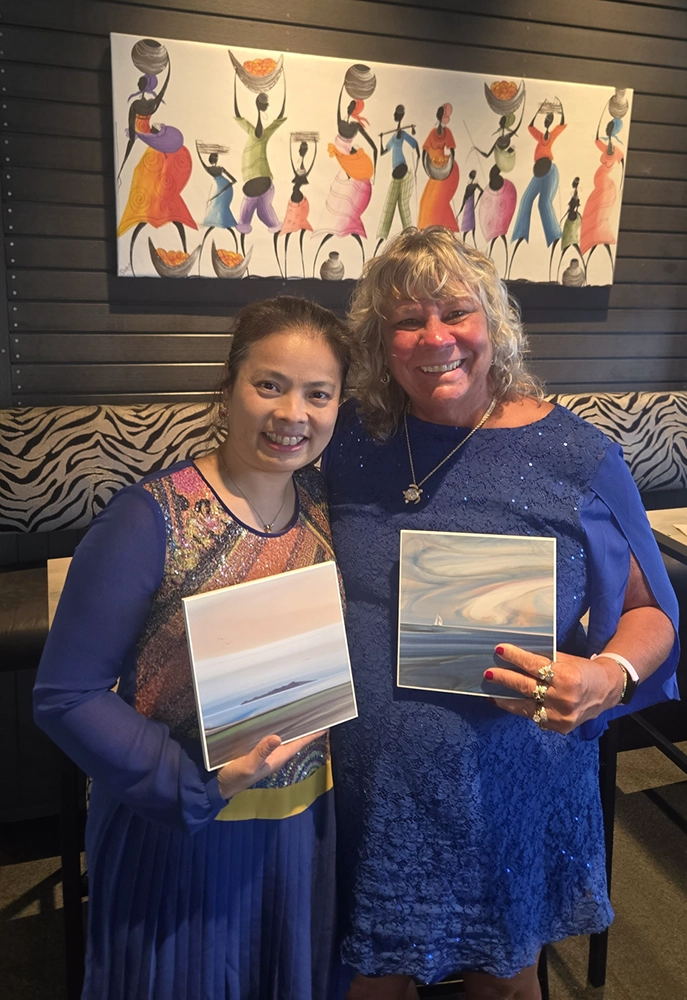
This sentiment captured the enthusiasm and renewed commitment generated by her visit across the national network. At a personal level, Diane has been an outstanding mentor. She has generously shared her knowledge, challenged me to think more strategically, and supported me in developing new research ideas, strengthening collaborations, and refining my skills as an independent researcher. Her mentorship has extended far beyond individual projects, giving me greater confidence to pursue an ambitious research program that aims to improve outcomes for infants and families in New Zealand. I am incredibly grateful for her generosity, encouragement and ongoing support.
Event Recap
Human Milk Institute (HMI) Symposium 2026
Rebecca Hoban MD MPH
Staff Neonatologist
Director of Breastfeeding Medicine
Director of Clinical Guideline Development
Seattle Children’s Hospital Division of Neonatology
Associate Professor of Pediatrics, University of Washington
The HMI Symposium was held in San Diego, CA, USA on March 11-12, 2026 plus pre and post-sessions. This now annual conference included physicians, scientists, IBCLCs, and public policy experts for sessions that ranged f rom lactation immunology to the new boards in breastfeeding medicine.
The pre-conference “Deep Dive” included a variety of sessions to choose f rom. I attended the maternal-pediatrics therapeutics session that included NIH program off icers like Camille Fabiyi who spoke of the importance of including lactation people in trials. Among other things, she discussed DASH, a NIH data and sample hub, that contains HM specimens f rom many studies that are available for secondary use. I loved a talk by Theresa Casey who presented a piglet model showing that colostrum intake in the f irst 24 hours affected lifelong health and fertility!
Invited speakers included ISHRML members like Sharon Donovan, who gave a great talk on approaches for utilizing HM bioactives for the next generation of formula, a controversial but vital topic. At the session on clinical implications of HM research, ISRHML’s Aloka Patel reviewed the challenges of lactation for late preterm infants, and I spoke about non-nutritional therapeutic uses of HM. Andrew Bremer, who has spoken at ISRHML, gave a helpful overview of HM research at the NIH in this ever-changing landscape. Finally, the post-conference workshop led by ISRHML’s Megan Azad focused on “communicating lactation science” to effectively engage stakeholders.
The symposium included poster sessions with an emphasis on trainees, networking opportunities with experts, and interesting perspectives like community partners who are working to strengthen maternal-infant outcomes by matching retirees to projects informed by prior careers. It was an interesting mix of experts on a diverse array of topics in a beautiful venue – definitely worth attending (especially coming f rom rainy Seattle!)
Trainee Spotlight:
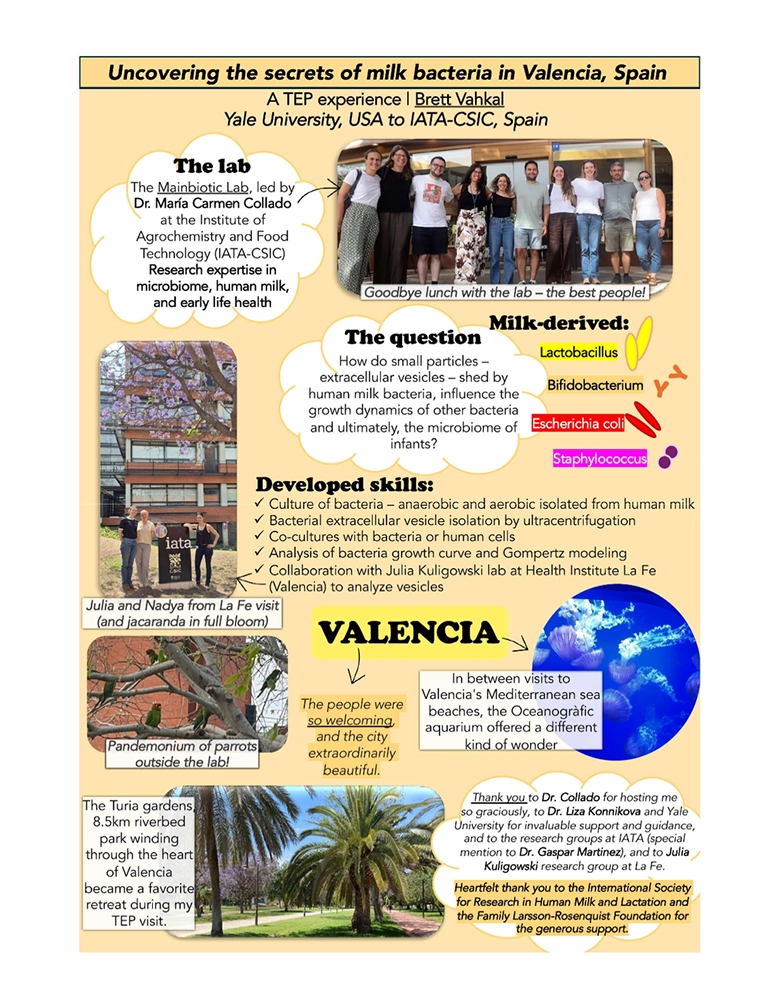
An ISRHML-FAmily Larsson-Rosenquist
Foundation Training Expansion Program (TEP) Experience
Connect • Learn • Engage
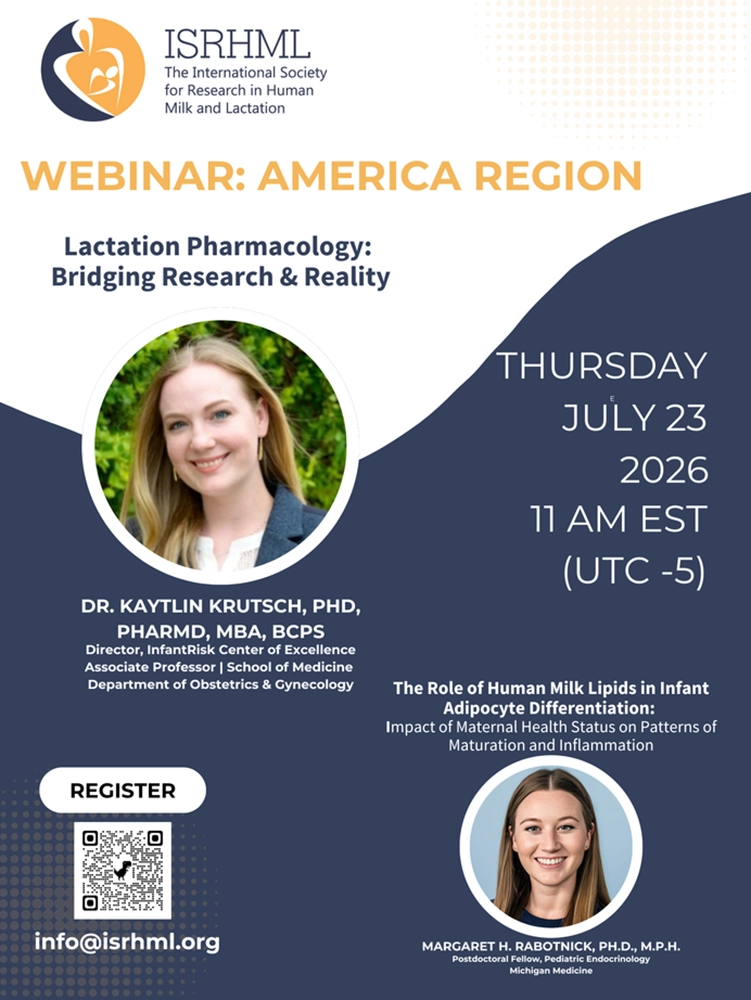
ISRHML
America Region Webinar

ISRHML
2026 Biennial Conference
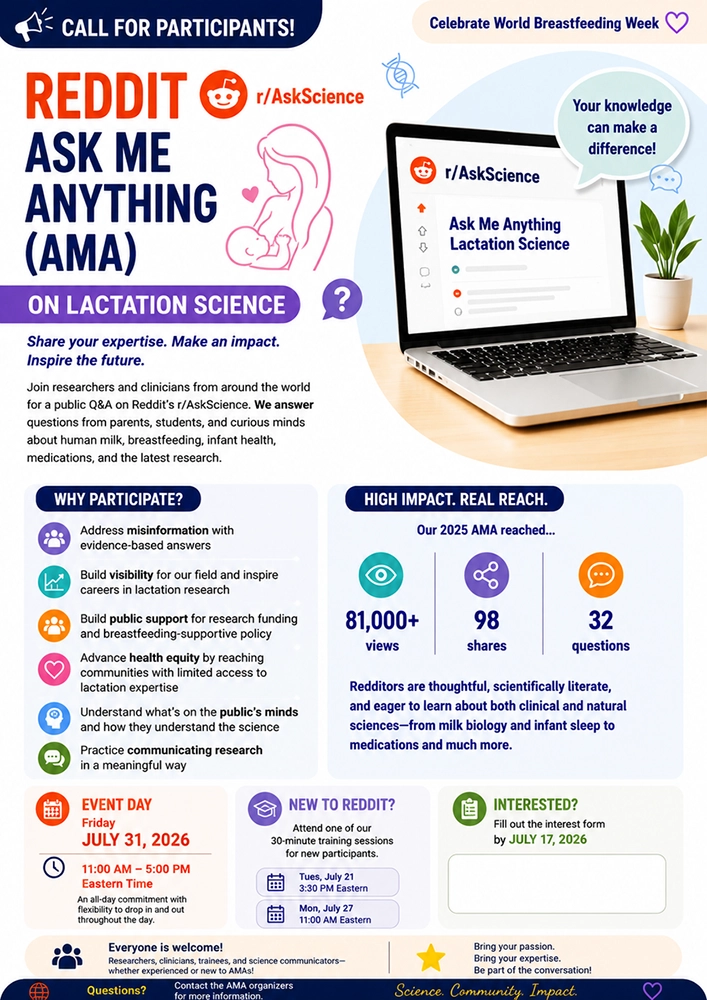
World Breastfeeding Week
August 1–7, 2026
Celebrate, advocate, educate, and connect with
colleagues around the world during World
Breastfeeding Week.


Stay tuned for more details!
Join the conversation beyond the newsletter
- Follow us online
Join the Milk Minutes Editorial Team
Are you passionate about human milk and lactation research? Do you enjoy science, communication, writing, and/or connecting with colleagues across our global community?
We are seeking enthusiastic members of all career levels and memberships (Full, associate & trainees) to help shape future editions of Milk Minutes. This is a great opportunity to develop leadership, networking, and communication skills while contributing to the Society.
For more information or to express interest, please contact Dr. Janet Williams